
The Mysterious World of the Jellyfish
By Silvana Ivandic-Määttä
For the To the Oceans Goes Balkan– series

It was early morning, the kind where the horizon looks like it’s still deciding what color to be. I didn’t expect the sea to feel alive in that way.
The beach was nearly empty… just me, a pair of sandals abandoned in the sand, and the slow rhythm of waves that felt more like breathing than motion.
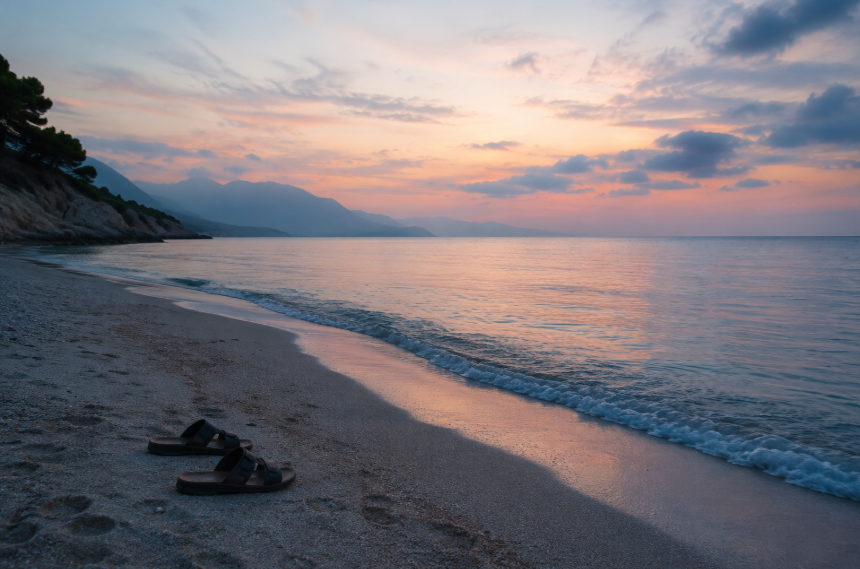
I waded in without thinking too much about it, letting the cold wrap around my ankles, then knees, then my waist.
That’s when I saw it.
At first, I thought it was just a trick of light a shimmer beneath the surface, like a floating piece of glass catching the sun. But then it pulsed. Softly. Deliberately.
A jellyfish, drifting as if it had nowhere to go and all the time in the world to get there.
I froze.
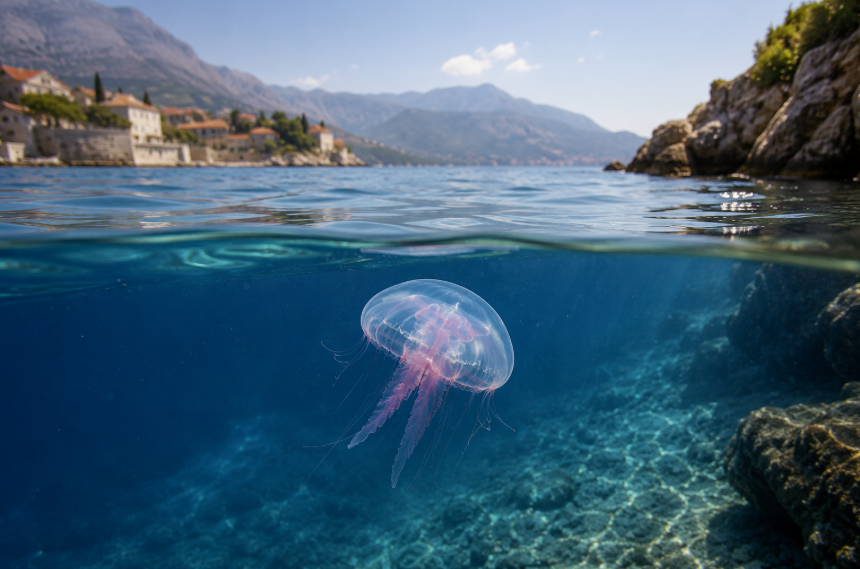
Every childhood warning came rushing back—”don’t touch, don’t go near, it will sting, it will hurt”. But there was something hypnotic about it. It wasn’t aggressive. It wasn’t even aware of me, or at least it didn’t seem to be.
It just existed. Rising and falling – with a quiet grace that made everything else feel clumsy.
Curiosity won.
And then a wave came. Not a big one, just enough to shift everything slightly. Enough to carry the jellyfish toward me before I could react.
I felt it brush against my wrist. The sting wasn’t what I expected. It wasn’t a sharp pain at first, but a sudden, electric awareness, like my skin had been turned up in volume. Then came the burn. Spreading in thin, branching lines.
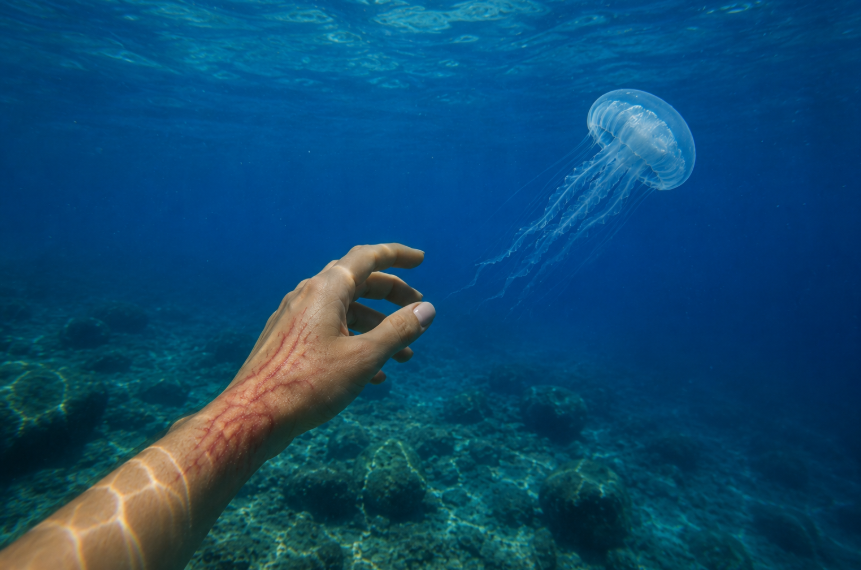
The jellyfish drifted on.
I stood there on the ocean floor, holding my wrist, watching the jellyfish fade back into the shifting blue. It didn’t chase me. It didn’t defend itself. It simply continued its quiet journey, as if our encounter had been nothing more than a passing moment.
I realized then, that not everything in nature is meant to be understood through control or contact. Some things are meant to be observed, respected, and left alone.
Beauty doesn’t always come with a permission. Sometimes it arrives with boundaries.
And sometimes, if you ignore it, it leaves a mark, just enough to make sure you remember.
What Exactly Is a Jellyfish?
Despite their name, jellyfish are not fish. They belong to a group of animals called cnidarians, which also includes corals and sea anemones. Their bodies are simple, but remarkably effective.
A typical jellyfish has a bell-shaped body with trailing tentacles that contain tiny stinging cells called nematocysts. These cells allow jellyfish to capture prey and defend themselves. Unlike most animals, jellyfish have no brain, heart, or bones.
Instead, they rely on a simple nerve network and the movement of ocean currents to guide them through the water. Their bodies are made of about 95% water, which gives them their soft, translucent appearance.
There are more than 2,000 known species of jellyfish, and scientists continue discovering new ones. Some are tiny, no bigger than a fingernail, while others are enormous. One of the largest known species can have tentacles stretching over 30 meters , longer than a blue whale.
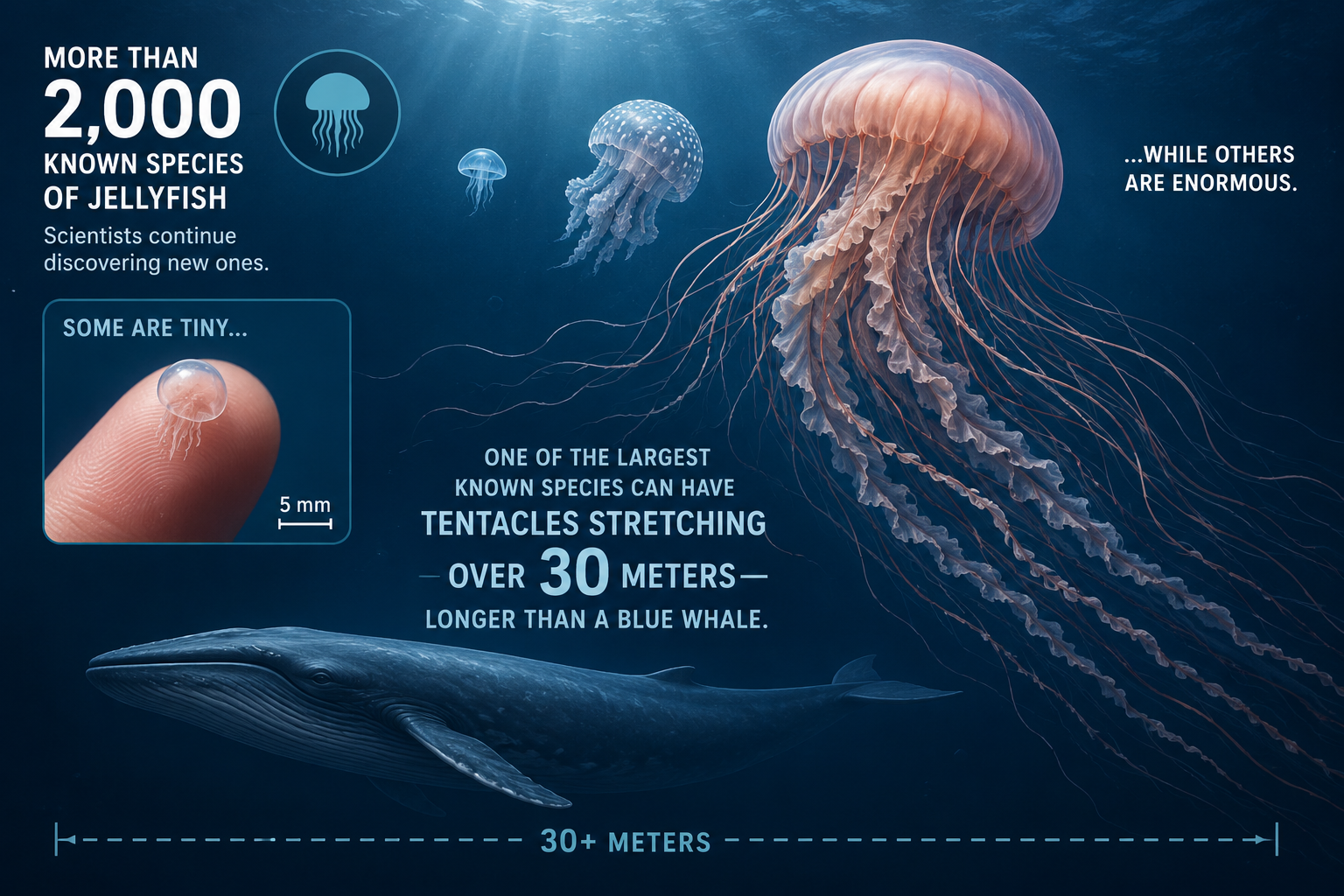
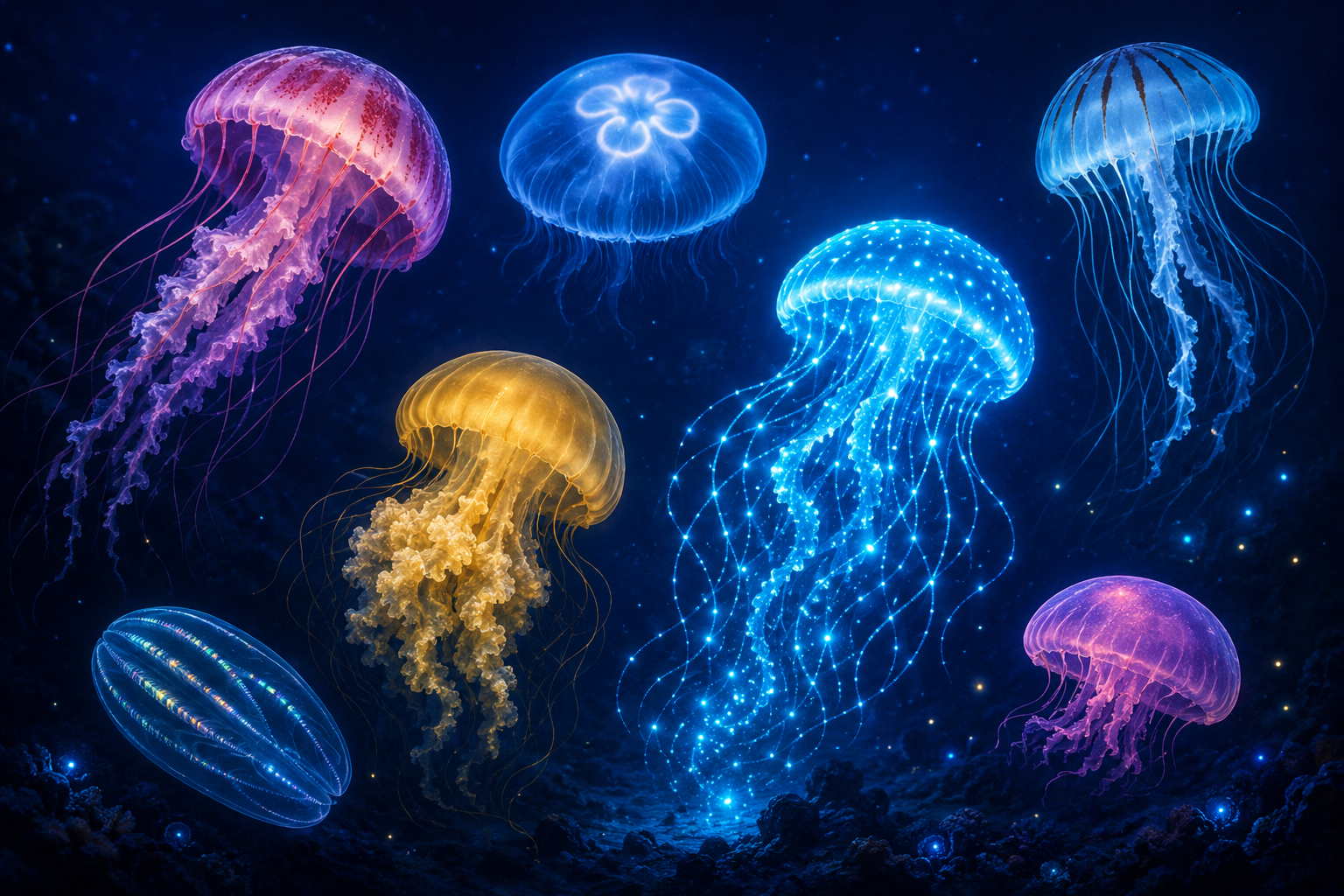
Jellyfish also come in many colors and shapes. Some glow in the dark through a process called bioluminescence, creating beautiful light displays in the deep ocean.
Jellyfish move by pulsing their bell-shaped bodies. When the bell contracts, water is pushed out, propelling the jellyfish forward. When it relaxes, water flows back in. This gentle pulsing motion allows them to glide through the ocean with surprising efficiency.
However, jellyfish are mostly drifters, meaning ocean currents largely determine where they travel.
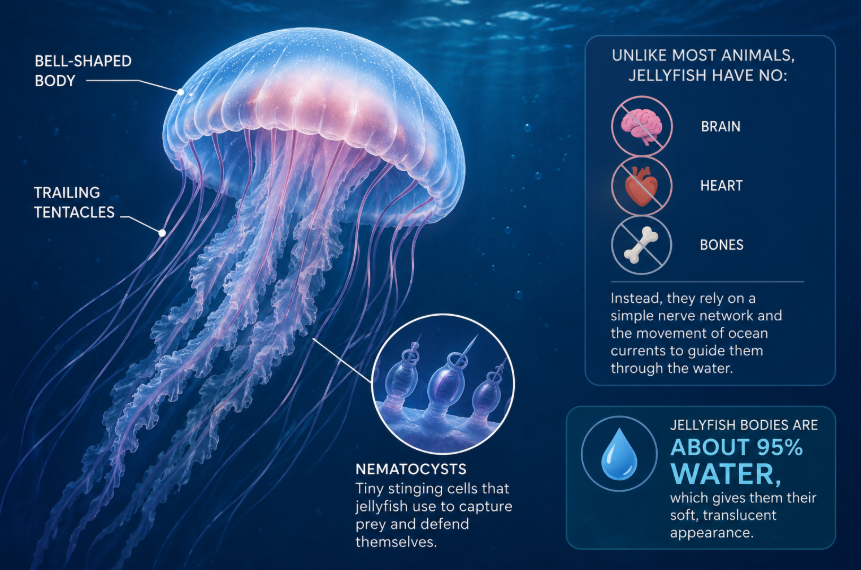
Many people know jellyfish because of their sting. When tentacles touch prey, or sometimes an unlucky swimmer a thousands of microscopic harpoons fire from the stinging cells.
These inject venom that can paralyze small fish. Most jellyfish stings are painful but harmless to humans. However, a few species can be dangerous and even deadly.
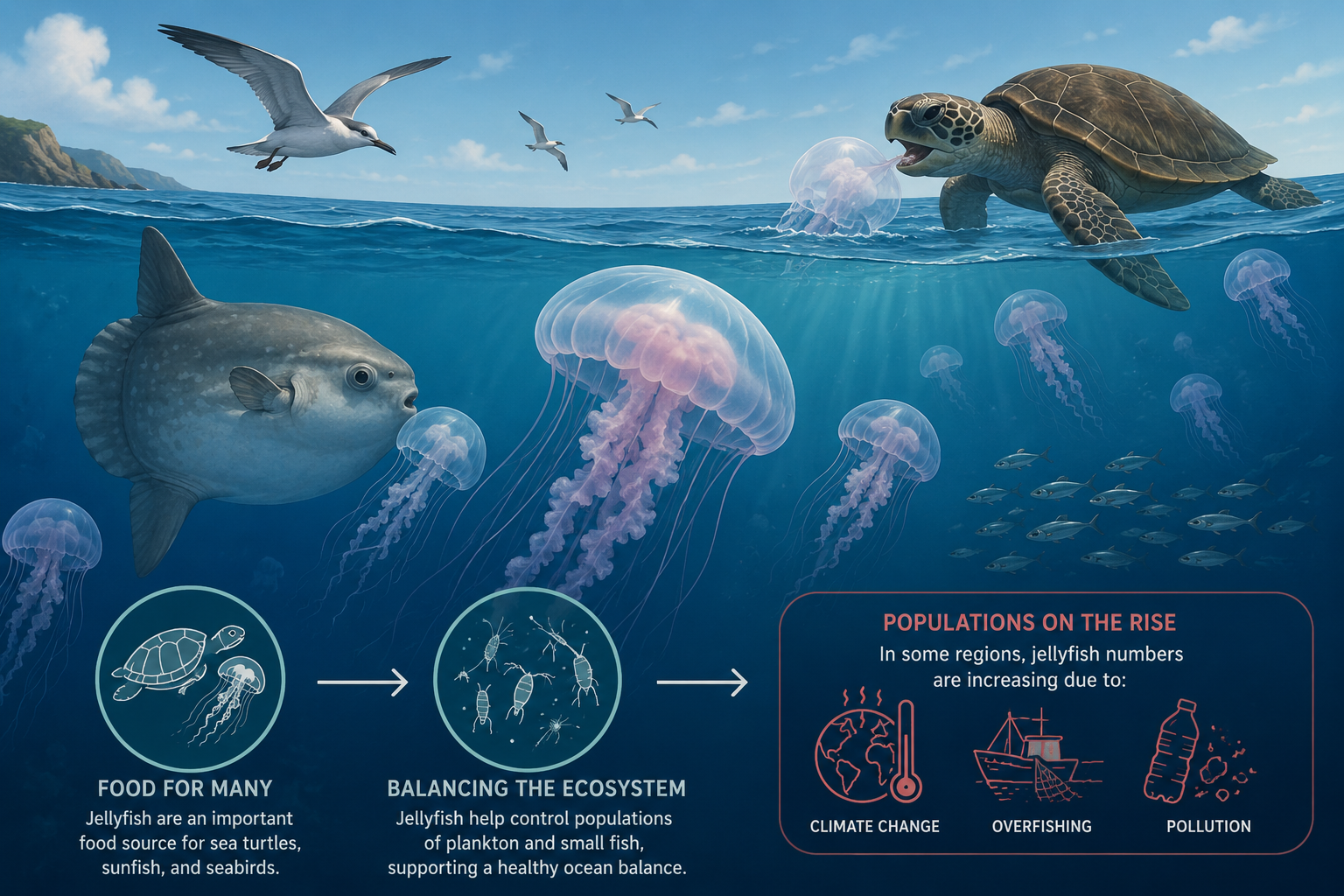
Although they may seem simple, jellyfish play a vital role in marine ecosystems. They serve as food for animals such as sea turtles, sunfish, and certain seabirds.
At the same time, they help control populations of plankton and small fish. In some regions jellyfish populations are increasing due to factors such as climate change, overfishing, and pollution.
Jellyfish remind us that life doesn’t always need complexity to survive. With their soft bodies, gentle movement, and ancient lineage, they represent one of nature’s most elegant designs.
Watching a jellyfish drift through the water can feel almost hypnotic, a quiet reminder of the mysterious and beautiful world hidden beneath the ocean’s surface.
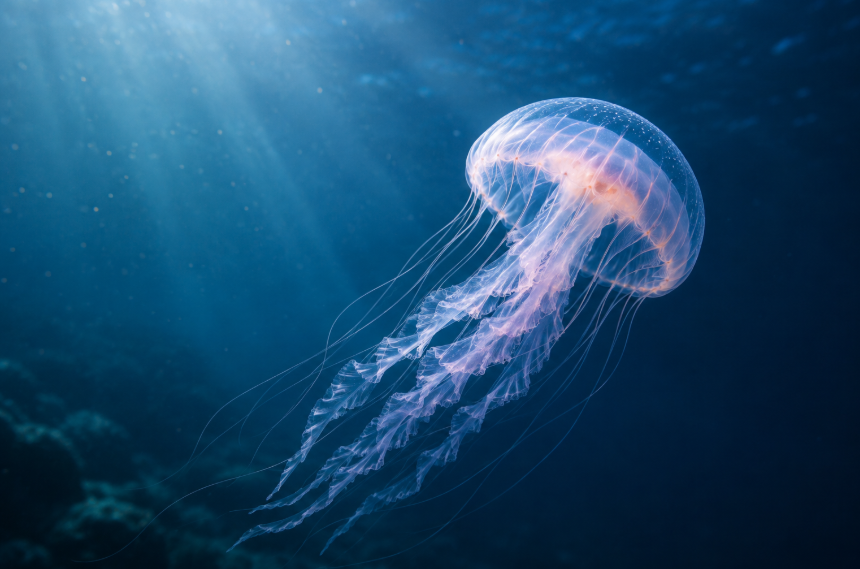
Some documentaries links on jellyfish:
https://www.youtube.com/watch?v=bAz3aIfD80k
Follow Nana’s great work in blogs here!


I really enjoyed reading this blog—it’s informative, engaging, and clearly written. Excellent job, Nana! Can’t wait for another story!
Thank you very much for your comment from my heart!
Thank you so much for your comment from the bottom of my heart!♥️⚘️
The Mysterious World of Jellyfish” is a beautifully written piece that captures both the elegance and mystery of these fascinating creatures. The vivid imagery and calm, immersive tone make the reader feel as though they’re drifting through the ocean alongside them. I especially loved how the story blends wonder with science, showing how something so delicate can also be incredibly resilient. A captivating and atmospheric read from beginning to end.
Dear Maggie! It is so wonderful and touching to read your comment! Thank you so much!♥️
This blog is yet another wonderful example of how Nana, through her writing, has opened a window for us into the connection between the Balkans and the sea. As a talented blogger, she beautifully shares inspiring stories about Balkan culture, marine life, and her own experiences by the sea in the region.
We are delighted to have such a passionate and skilled writer on board, and we are proud to have Nana as part of the To the Oceans Project Team.
Warm regards to all readers,
Sini
Project Coordinator, To the Oceans
Dear Sini, thank you so much for your support and encouragement! Proud to be a part of the team and looking forward to go on with future projects!! ♥️⚘️
Yours, Nana
This IS DIVINE !!! UNBELIEVABLE , GORGEOUS . GO ,GOOO Silvana💪💕
Dear Gordana, thank you very much for your kind support and comments from day one!! With love, Silva♥️
I truly enjoyed this blog. it’s both engaging and insightful, and very well written.
Great work, Silvana!
Looking forward to your next post!
Thank you so much Dario for your comment! And thank you for following us!
In one word, brilliant. It’s beautifully written, and the reader can vividly imagine being on that beach. A perfect morning with an unexpected twist, yet there’s still a quiet beauty in it.
Thank you very much Bostjan for your comments!
Draga Silvana,
vjerujem da susret s meduzom čuvaš u mislima poput najljepšeg dragulja 🪼💎.
Uživaj i dalje dijeli s nama dragocijene trenutke. 🥰
I fotografije. Vrhunske su!!! 🏆
Pozz i grlim 🩵
Ivana, hvala ti od srca na tvom komentaru!♥️
An excellent blog with well-structured content and valuable insights.
I’m looking forward to more posts like this!
Well done, Silvana!
You’re the one!
You’re over the top!
🙂
Thank you VERY much Drazen!🙂
This is stunning, as always. Please write more soon.
Dear Nicholas, I promise I will. Thank you for your comment!