
The Naturally Healing Sea Salt
By Silvana Ivandic-Määttä
For the To the Oceans Goes Balkan series
nana@totheoceans.com

Why Is the Sea Salty?
And What Are the Benefits of Sea Salt?
In my previous blog, “How the Sea Holds My Scars,” I wrote about the positive effects the sea has on the human body and how deeply it supported my healing process after major hip surgery.
Since ancient times, our ancestors have understood the profound importance of the sea—both as a source of life and as a powerful natural remedy. Sea salt, in particular, has long been valued for its vital role in sustaining life on Earth.
It is therefore no surprise that countless myths and legends have emerged throughout history, attempting to explain why the sea is salty. According to a mystical fairy tale I once heard in Norway, the sea was not salty in the beginning. However, due to human greed, a miraculous mill that endlessly ground salt was lost to the depths of the ocean.
In other versions of the story, the mill is at the center of a quarrel between two brothers, or a boy who owns the magic mill and an evil pirate who tries to steal it.

Regardless of the details, the moral remains the same: a warning against greed.
In the end, no one could retrieve the mill—or knew how to stop it—so it continued grinding salt endlessly at the bottom of the sea. And that, according to the legend, is why the sea is salty.
But what are the real facts behind sea salt?
Today, science offers a clear explanation. The salt in the ocean originates from freshwater rivers that flow into it. With every rainfall, minerals and salts are washed from rocks and soil into rivers, which then carry them to the sea.
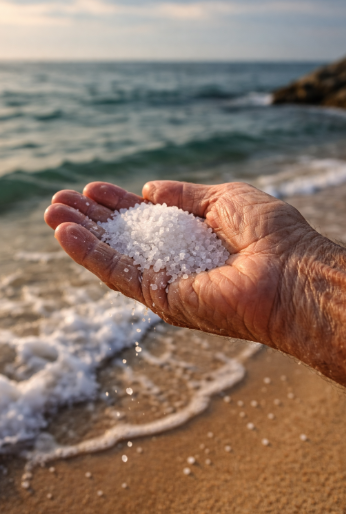
While these minerals accumulate, ocean water continuously evaporates under the sun’s heat. The water turns into vapor, but the salt remains—making the sea saltier over time.
Additionally, underwater volcanoes and hydrothermal vents on the ocean floor release minerals and salts directly into the water, further enriching it.

So what makes sea salt special?
Sea salt is naturally rich in minerals that support nerve function, heart health, and muscle performance. Unlike refined table salt, it remains largely unprocessed and retains many of its natural nutrients. Salt itself has been used as a flavor enhancer and preservative for thousands of years.
In recent years, however, salt has been widely criticized and labeled as unhealthy. While excessive salt intake can indeed be harmful, it is important to distinguish between refined table salt and natural, mineral-rich salts like sea salt.
Sea salt is produced by evaporating seawater—either through solar evaporation in open-air salt pans or through vacuum evaporation. Because it is unrefined, it retains its mineral content.
Refined salt, on the other hand, is typically mined from underground salt deposits. It must undergo heavy processing to remove impurities, a process that also strips away valuable minerals. Iodine is often added afterward, resulting in iodized salt.
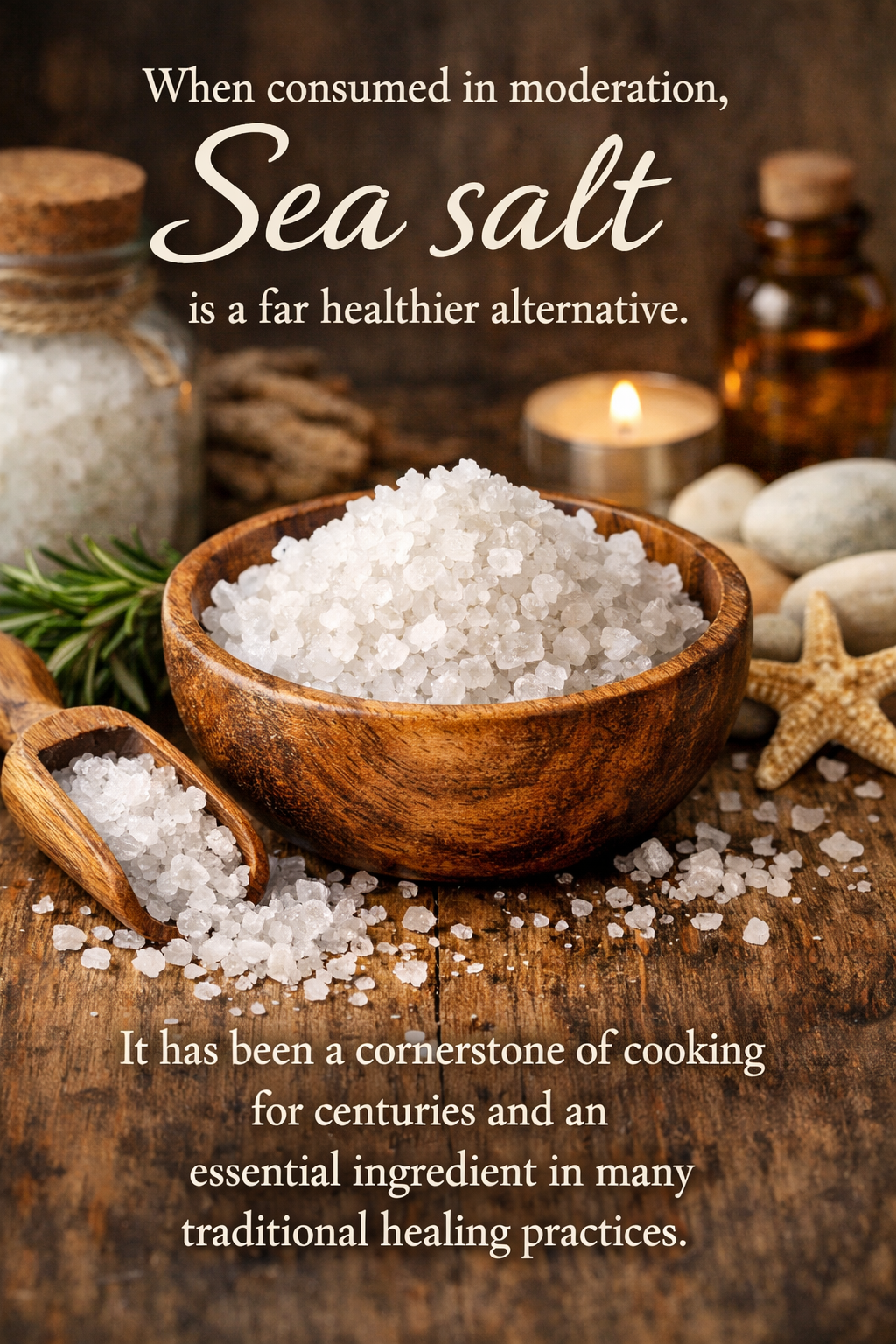
Sea salt contains around eighty trace minerals, carbonates, and sulfates, including calcium, potassium, bromine, sodium, manganese, magnesium, iodine, iron, fluorine, and silicic acid—elements essential for human well-being.

So the next time you feel the need to relax both body and mind, fill your bathtub, add a handful of sea salt, and allow nature to do the rest.
After all, as Karen Blixen beautifully wrote:
“The cure for anything is saltwater: sweat, tears, or the sea.”






Thanks for the fascinating article about sea salt and it’s many benefits!
A good insight into the world of salt. And a cleansing agent for wounds, my eldest sister was advised to take salt baths after her appendix operation. I have cleaned cuts on my hands in sea water when fishing.
Thank you!